
Small Renovation. Dramatic Transformation.
Why the Biggest Transformation Had Nothing to Do with Square Footage
If you own a builder-grade home, you've probably had this thought at least once:
"Our home works...it just doesn't feel special."
The floor plan is functional. The rooms are spacious. But the architecture feels generic, the finishes are predictable, and nothing reflects your personality. You start wondering whether the only way to create the home you really want is to build an addition—or move somewhere else.
That was exactly where our Bridle Ridge clients found themselves.
They loved their home and its location. They weren't looking for more square footage—they simply wanted their home to feel more beautiful, more personal, and more reflective of the way they live.
The good news? You don't need an addition—or even a whole-home renovation—to make a builder-grade home feel custom. Thoughtful architectural changes, custom millwork, layered materials, and highly personalized interior design can dramatically transform the character of a home without changing its footprint.
By transforming just three connected spaces—a mudroom, a hallway, and a bar—we completely changed the experience of living in the home.
No walls were moved.
No rooms were added.
Yet today, the house feels as though it was custom-designed from the very beginning.
Custom Homes Begin with Better Architecture
One of the biggest differences between builder-grade and custom homes isn't just the finishes.
It's the architecture.
Builder-grade homes are typically designed for efficiency. Doorways are often smaller than they could be. Openings are simple rectangles. Utility spaces disappear into the background. Nothing feels intentionally composed.
Custom homes feel different because every opening, every sightline, and every architectural detail has been thoughtfully considered.
At Bridle Ridge, we started by reimagining the architecture itself.
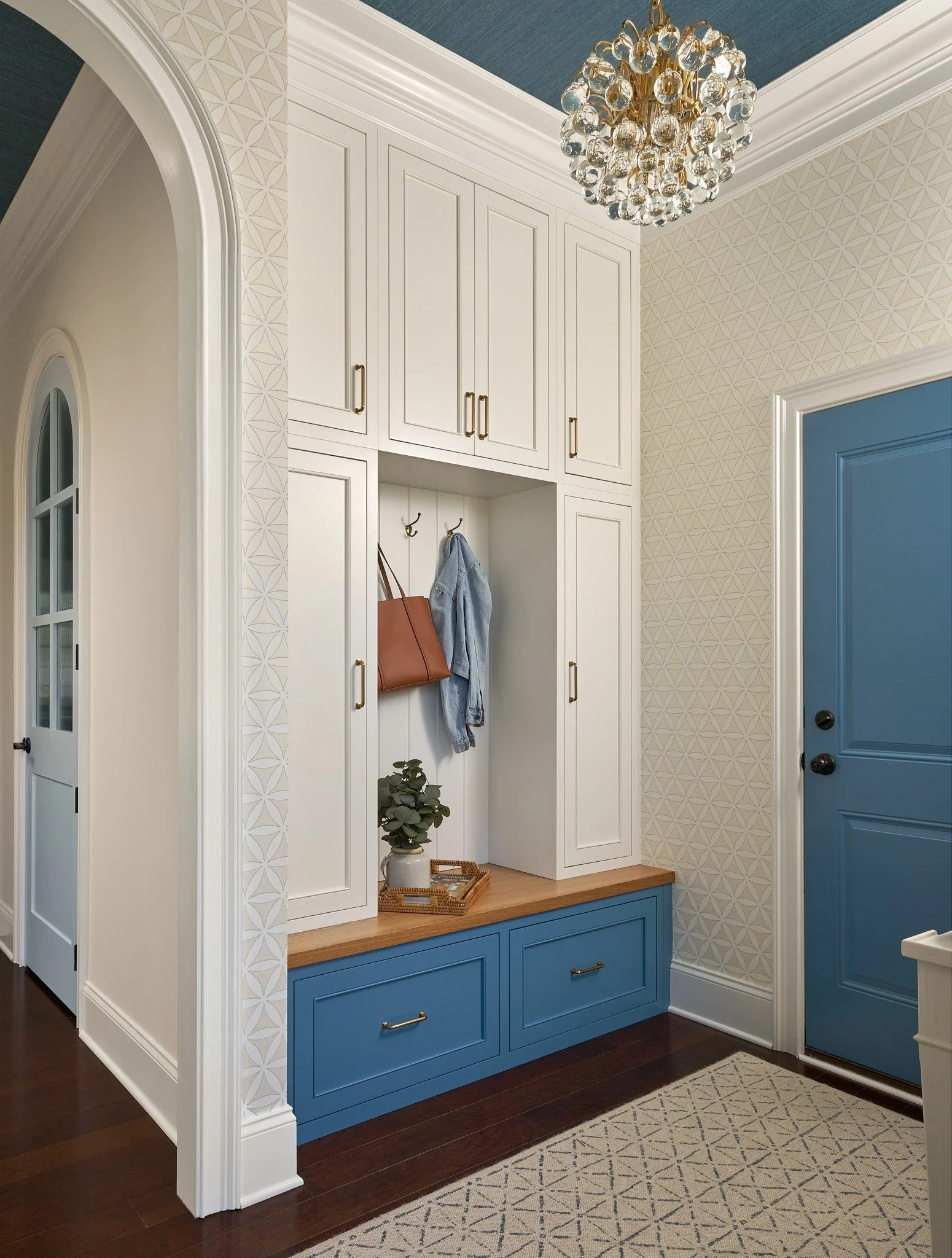
Several doorways were widened and raised into elegant arches, creating a softer, more gracious flow throughout the home. Those repeated arches immediately establish a sense of craftsmanship that simply doesn't exist in a typical builder-grade home.
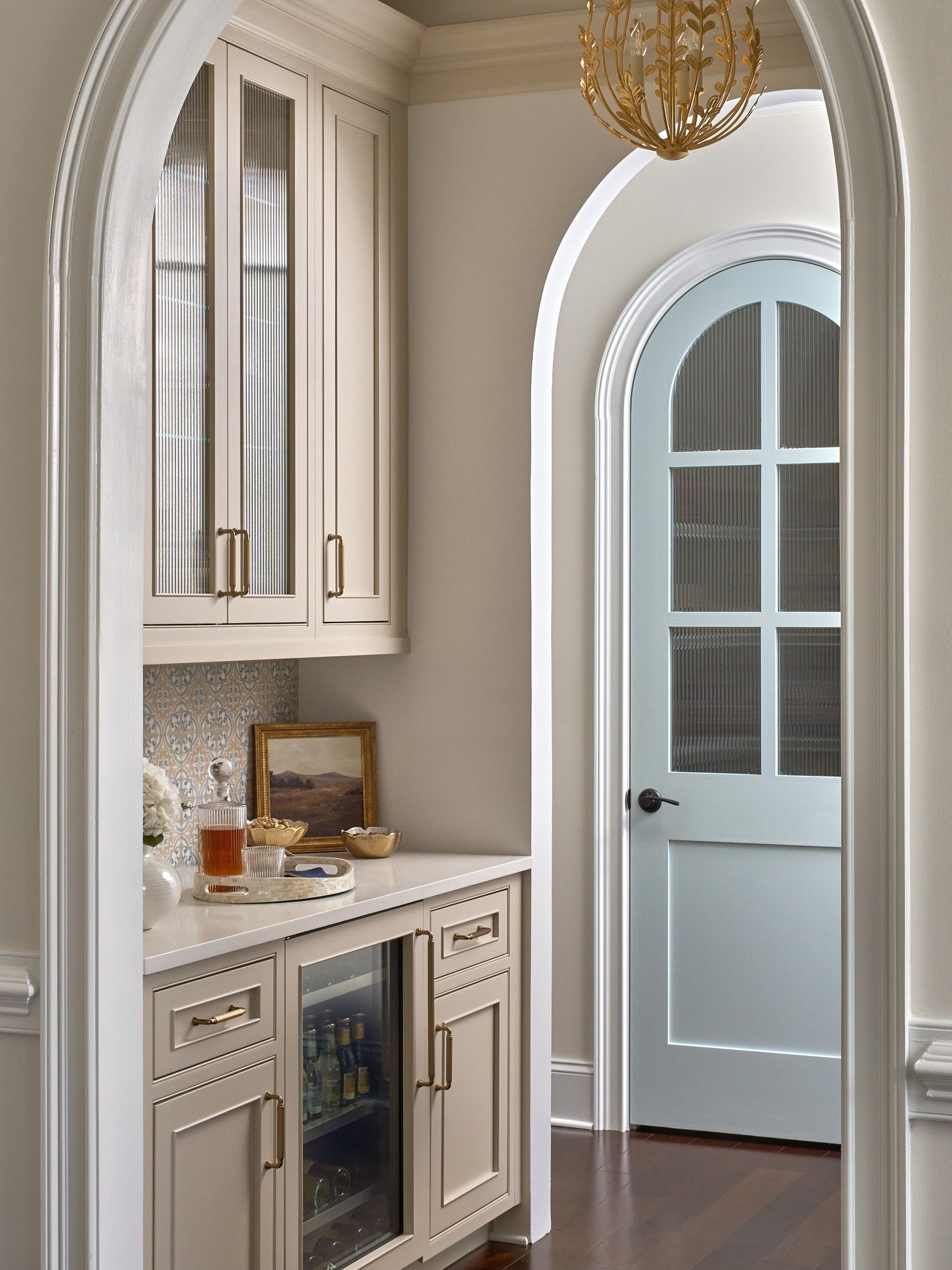
One of our favorite transformations centered on the pantry. We replaced an ordinary pantry door with a taller arched door featuring reeded glass panels and painted it a beautiful soft blue. Instead of blending into the background, it now serves as an architectural focal point that draws you through the space.
These changes aren't dramatic because they're flashy.
They're dramatic because they make the entire home feel more refined.
Layering Beautiful Details Creates a Custom Home
Architecture established the foundation.
Then we layered in the details that give the home its personality.
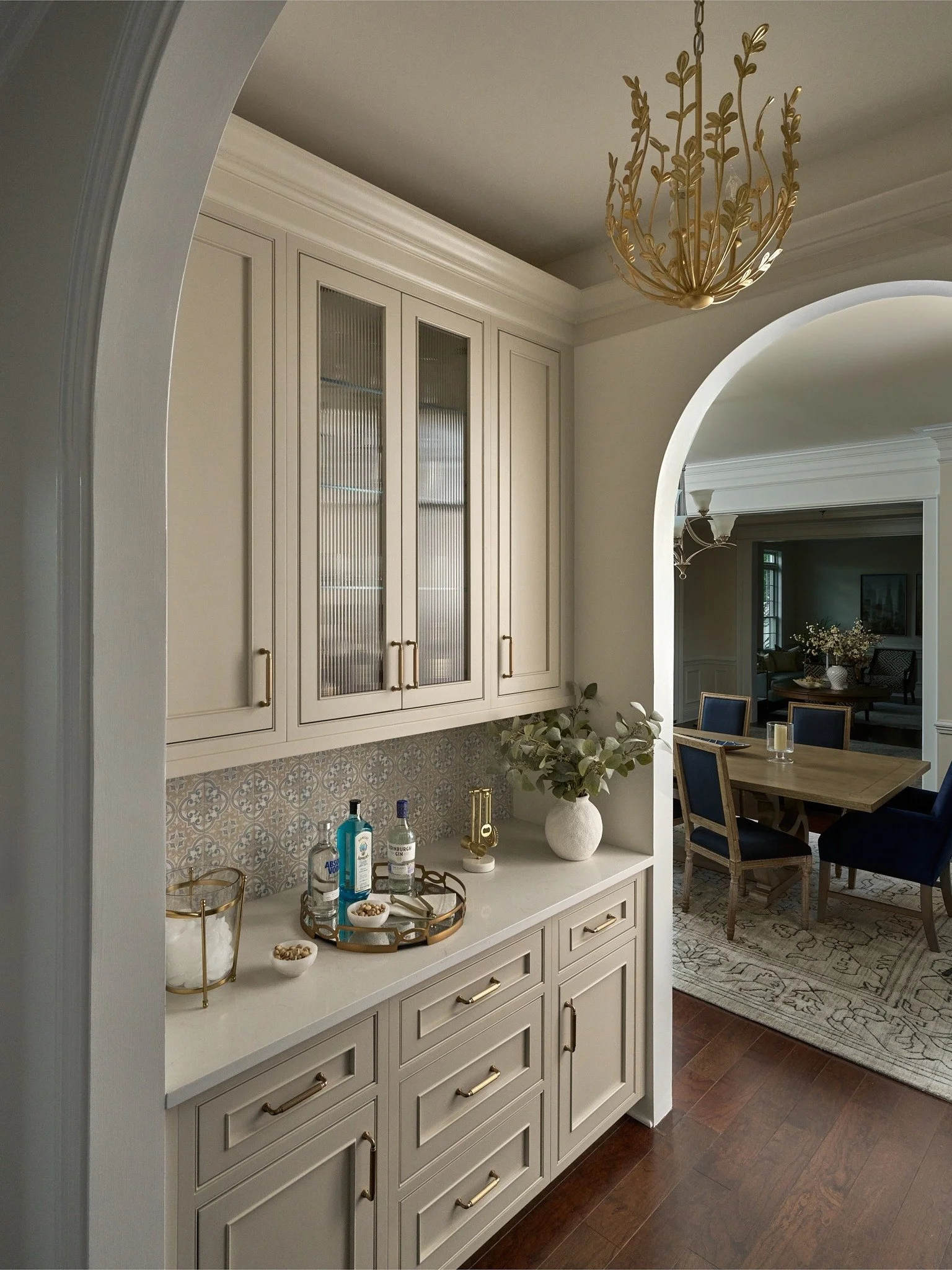
Throughout the project, we introduced custom millwork, floor-to-ceiling cabinetry, statement lighting, textured wallcoverings, handcrafted tile, decorative moldings, and beautiful aged brass hardware that acts like jewelry throughout the home.
To unify the spaces, we developed a sophisticated palette of creamy whites, warm taupes, soft blues, bold blue accents, and aged brass finishes. The colors repeat from room to room, creating visual continuity while allowing each space to have its own personality.
One of the home's most memorable design moments is the dramatic blue grasscloth ceiling. Framed by substantial crown molding and illuminated by decorative lighting, it transforms the hallway from a simple passageway into an architectural destination.
Rather than treating the ceiling as an afterthought, we made it one of the defining features of the project.
These carefully layered details quietly communicate something every homeowner notices, even if they can't immediately explain why:
This doesn't feel like a builder-grade home anymore.
The Hardest-Working Room Became One of the Most Beautiful
Mudrooms are usually designed around storage.
We believe they should also bring you joy.
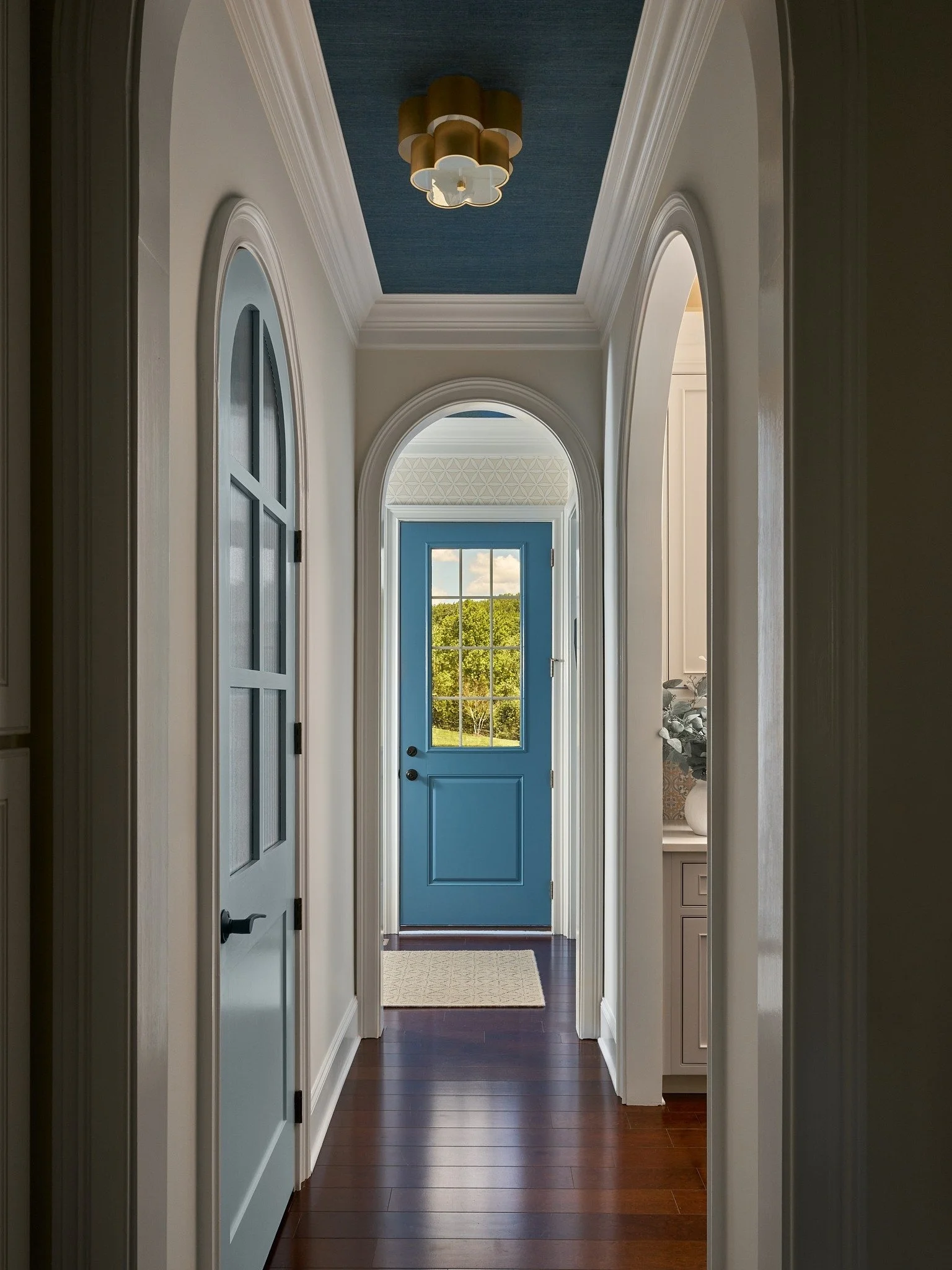
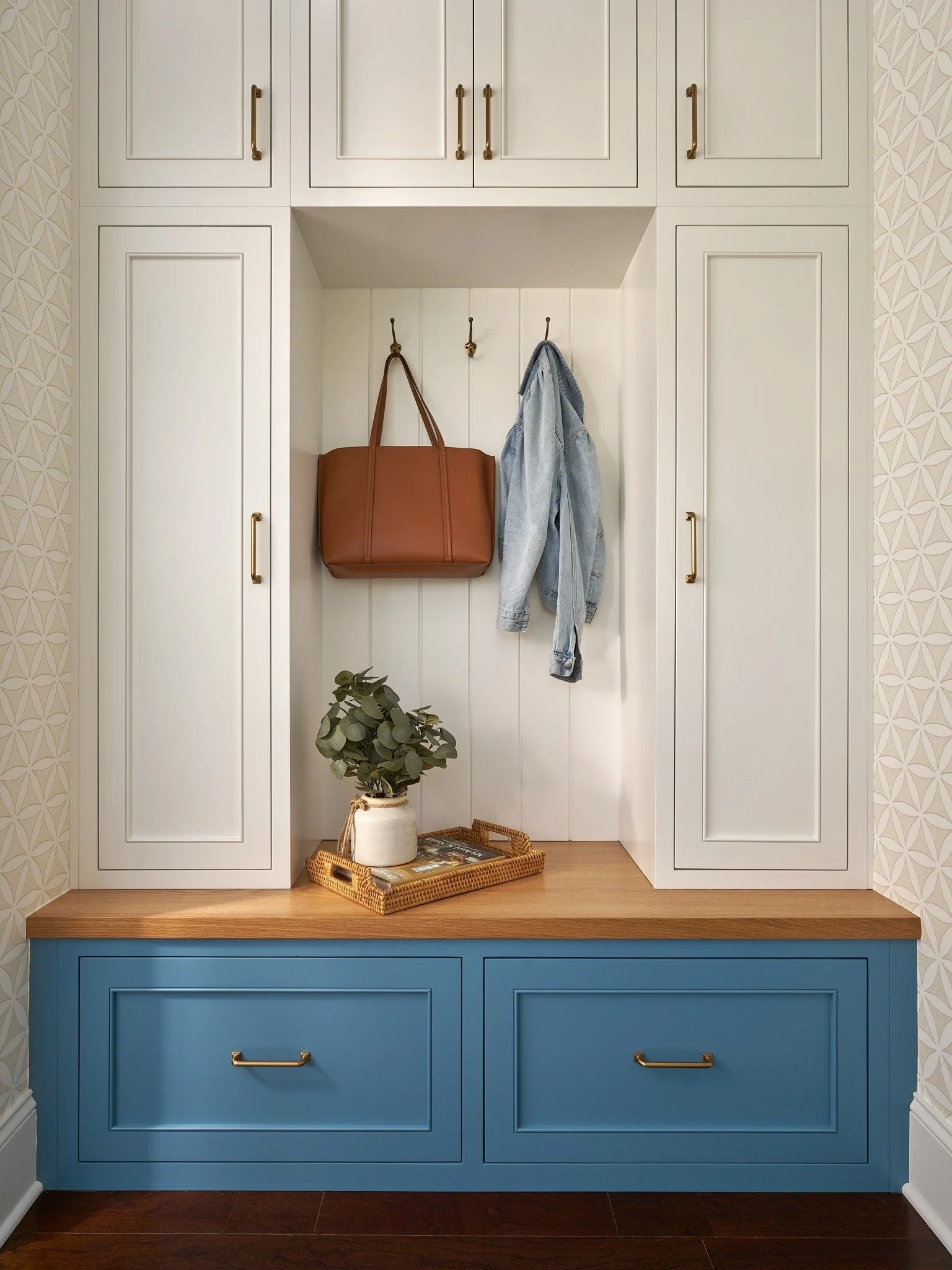
Custom floor-to-ceiling cabinetry creates generous concealed storage while keeping the space feeling clean and organized. Hidden pull-out drawers beneath the bench give every family member a dedicated place for shoes, eliminating one of the biggest sources of everyday clutter.
But functionality wasn't enough.
We wanted the mudroom to become one of the happiest spaces in the home.
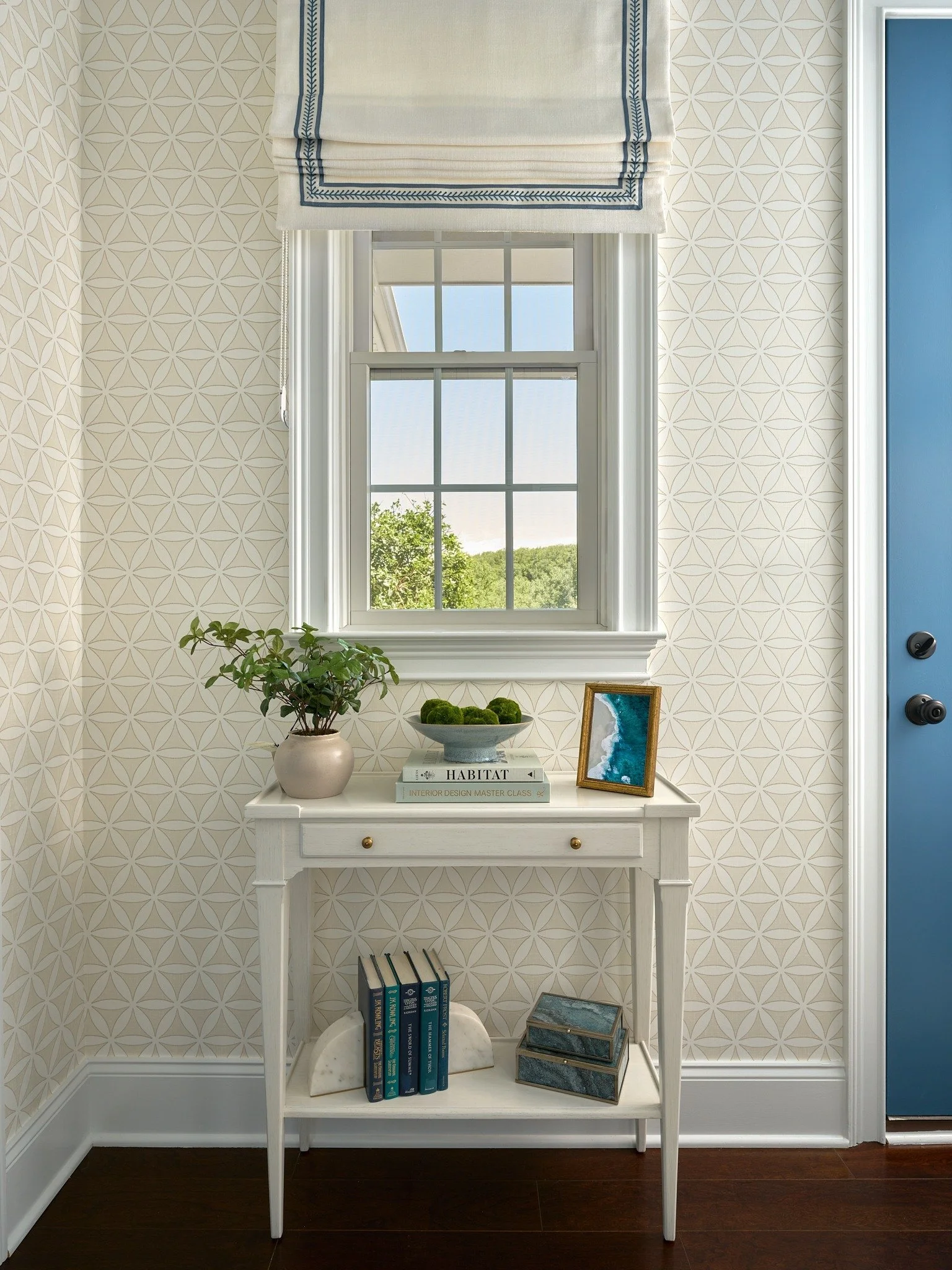
A warm wood bench softens the painted cabinetry. A playful geometric wallpaper introduces subtle texture. Vibrant blue drawer fronts add personality, while beautiful aged brass hardware, a sparkling decorative chandelier, and a custom Roman shade with blue trim layer in warmth and refinement.
The result is a mudroom that's every bit as beautiful as it is practical—a space that welcomes the family home every single day.
A Builder-Grade Bar Became a Destination
Before the renovation, the bar felt dark, heavy, and uninspired—a typical builder-grade feature that blended into the background rather than contributing to the home's personality.
We completely reimagined it.
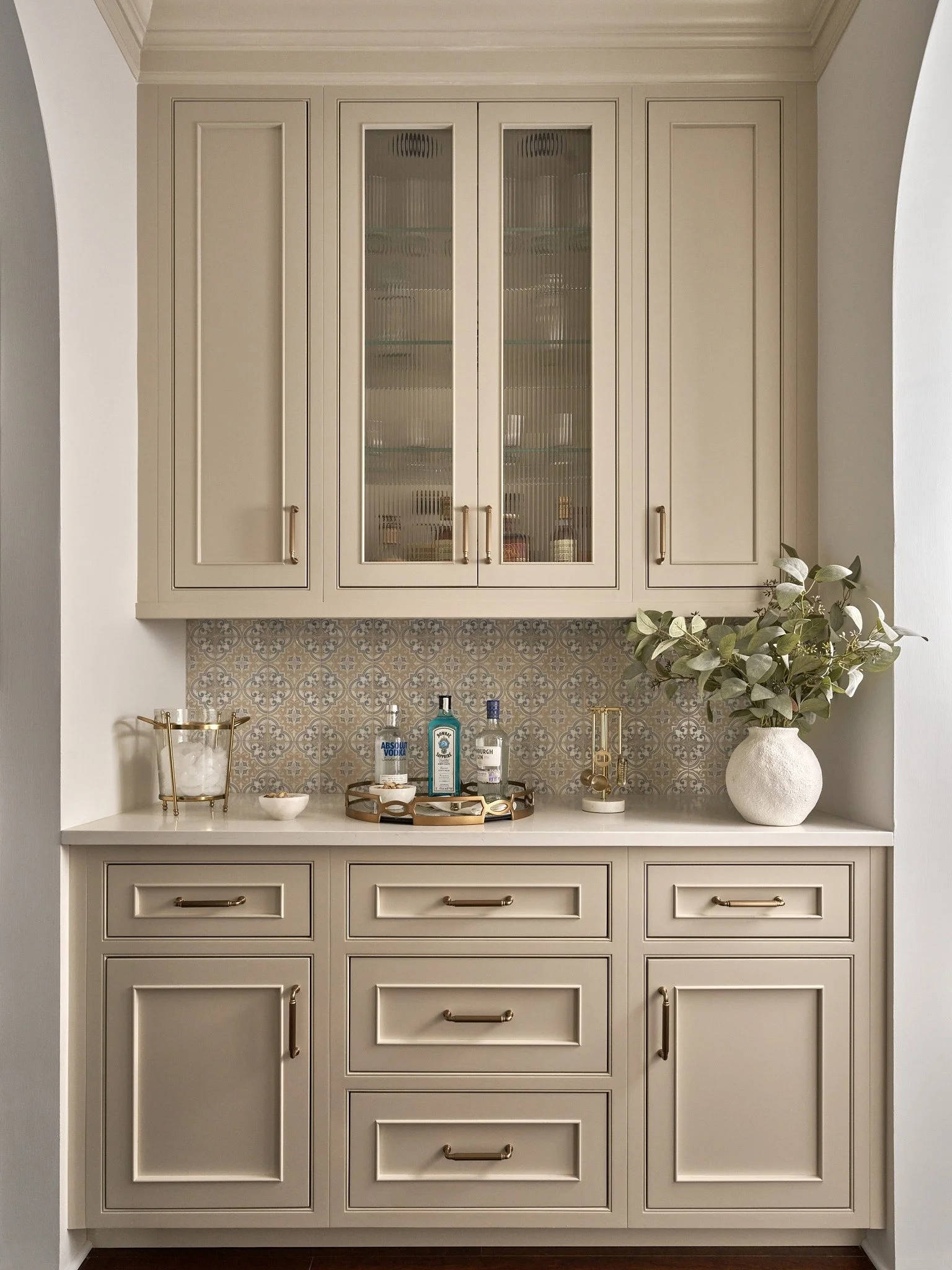
By dramatically widening and raising the surrounding openings into graceful arches, the space immediately feels brighter, more open, and better connected to the adjoining rooms. The original dark cabinetry was replaced with custom floor-to-ceiling taupe cabinetry, giving the room a lighter, more tailored presence. Reeded glass cabinet doors add texture while softly displaying glassware, and layered lighting—including interior cabinet lighting, under-cabinet lighting, and uplighting tucked into the crown molding—creates warmth and dimension throughout the day and evening.
Every finish was selected with intention. Beautiful aged brass cabinet hardware provides a jewelry-like finishing touch, while the painted and etched marble mosaic backsplash introduces artistry, texture, and movement that immediately draws your eye.
The greatest transformation wasn't just how the bar looks—it was how it feels. What was once an unremarkable builder-grade feature has become one of the home's most welcoming spaces, naturally inviting family and guests to gather, linger, and enjoy one another's company.
The Difference Between Builder-Grade and Custom Isn't Size
It's imagination.
The Bridle Ridge project demonstrates that you don't need an addition—or even a whole-home renovation—to dramatically change how your home feels.
Sometimes the biggest transformation comes from looking beyond what's already there.
Architectural details that were never included.
Materials layered with intention.
Unexpected color.
Thoughtful storage.
Beautiful lighting.
Craftsmanship that makes a home feel collected rather than constructed.
The best custom homes aren't defined by their square footage.
They're defined by the care, creativity, and intention behind every design decision.
At Lindsey Abrams Design, we help homeowners throughout Bethesda, Chevy Chase, Potomac, Olney, Northwest Washington, DC, and Northern Virginia transform builder-grade and outdated homes into spaces that are beautiful, highly functional, and uniquely personal.
Because the most dramatic transformations don't begin with more square footage.
They begin with imagination.
Frequently Asked Questions About Updating a Builder-Grade Home
Can you make a builder-grade home feel custom without adding square footage?
Absolutely. Many of the most dramatic transformations come from improving the architecture, introducing custom millwork, layering high-quality materials, and designing spaces around the way your family lives. The Bridle Ridge project is proof that a few well-designed spaces can completely change the feel of an entire home.
What's the difference between a builder-grade home and a custom home?
Builder-grade homes are designed for efficiency and broad appeal, often featuring standard architectural details and finishes. Custom homes feel more personal because every architectural feature, material, finish, and design decision has been selected intentionally to create a cohesive, tailored home.
Which home improvements make the biggest impact?
While kitchens often receive the most attention, high-use spaces such as mudrooms, hallways, home bars, and entryways can have an outsized impact on how a home feels because they're experienced every day. Investing in these spaces often transforms the overall experience of living in your home.
Never Worked with an Interior Designer? Here are four things to know before you do.
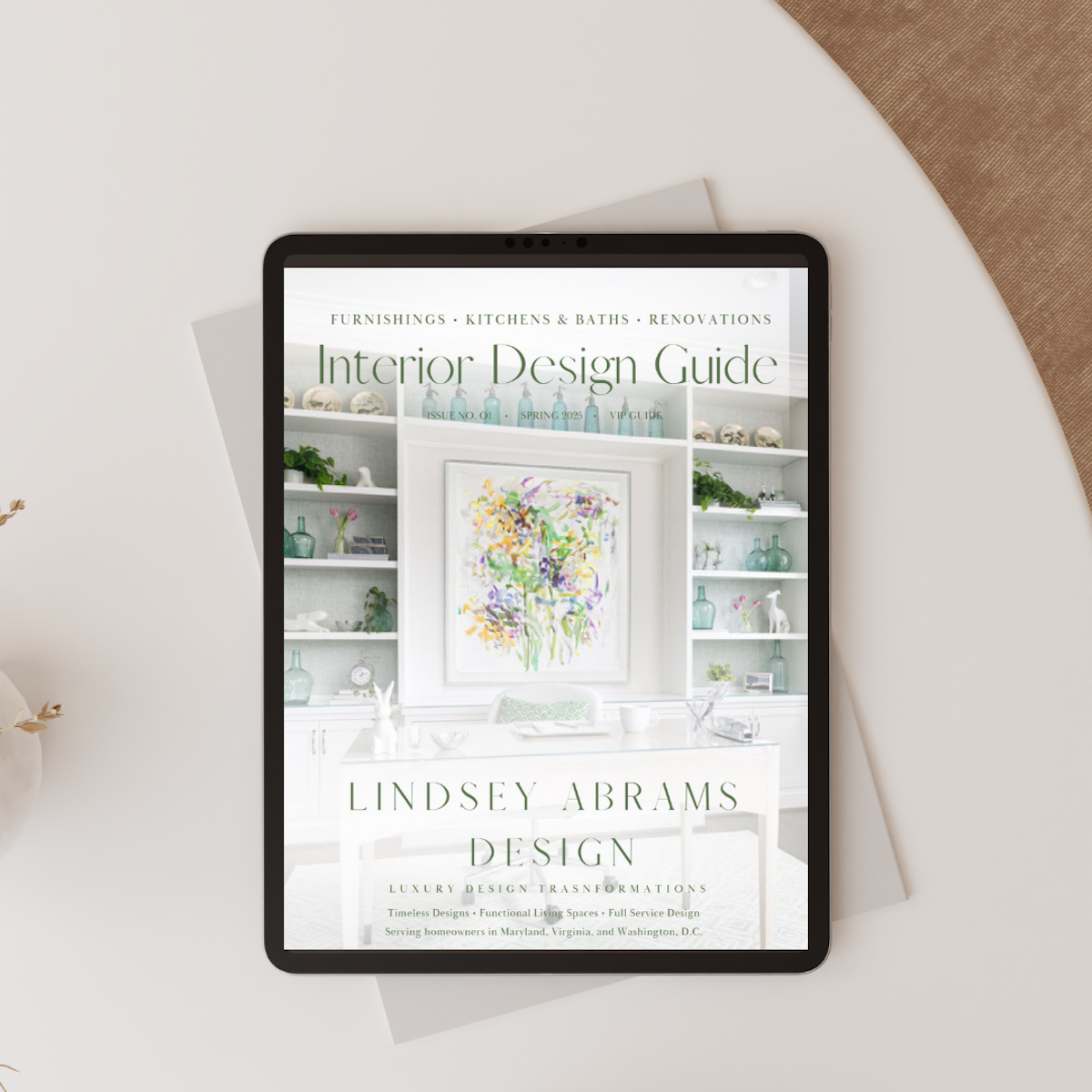
Creating a home that feels effortless, refined, and uniquely yours starts with hiring the right designer. Here’s what you need to know.
Meet Christine
Welcome! I’m Christine, Principal at Lindsey Abrams Design. I love getting to know my clients, working together to create homes that feel warm, inviting, and authentic.
For me, great design isn’t just about aesthetics—it’s about how a space makes you feel the moment you step inside. Your home should reflect your lifestyle, tell your story, and function seamlessly for the way you live. With years of experience in residential interior design, my goal is to blend style with functionality, crafting spaces that are as beautiful as they are livable.
My approach combines expert project coordination, custom-tailored design, and meticulous attention to detail, ensuring every element is thoughtfully curated for a timeless, cohesive result. I take care of every aspect—from concept to completion—so you don’t have to.
Whether you need help with a renovation, a kitchen and bath transformation, or a full-home furnishing and décor project, I collaborate with the best artisans and industry professionals to bring your vision to life.
Let’s create a home that’s not just beautiful, but distinctly yours.
